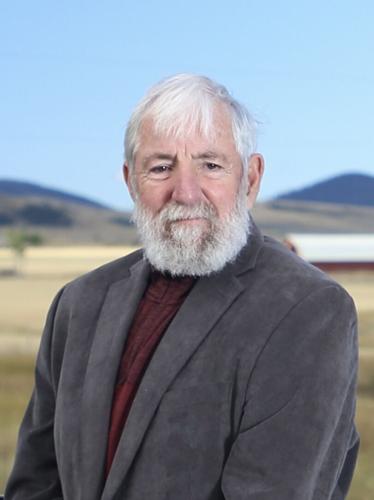


Navy veteran Greg Bahny
With daily incoming mortar fire, the cries for “corpsman” on the battlefield during the Vietnam War were constant. And unlike the troops who could take cover on the mountainside in trenches or while on patrol through the jungle, the enlisted U.S. Navy medics were running and crawling toward the source of the mayhem, all the while trying to avoid the North Vietnamese guns aimed at them.
Facing severe hazards while providing life-saving trauma care on the frontlines was something that Greg Bahny did not have top-of-mind when he entered the Navy recruiting office at age 17.
“I couldn’t afford college, so when I told the recruiter I wanted to be a doctor, he said, ‘You’ll be doing surgery in a year,’” Bahny said.
In addition to basic training at the Naval Training Center in San Diego, Bahny had to complete a 26-week first aid course, six weeks of field medical training at Camp Pendleton that included simulated battle conditions, and then a six-month training period at the now-closed Oakland Naval Hospital, which served wounded veterans. There, Bahny worked as a ward corpsman with up to 40 military amputee patients, dispensing nonnarcotic medications, changing dressings and helping to administer IVs.
“The patients were all amputees and our job was to help teach them life skills again, even simple things like how to make a bed. You didn’t want them to become dependent on you,” he said. “Was it sad? Yes, you’d see triple and quadruple amputees recovering from their war injuries. We wanted them to get better so they could continue to be valuable members of society and have self-worth.”
Unlike today’s deployments, soldiers during Vietnam were sent over individually, as opposed to being part of an entire platoon. Following his time at Oakland Hospital, Bahny received his orders to report to Vietnam. He wouldn’t find out what unit he was assigned to until he landed at the staging area in Okinawa.
“There was one unit no one wanted to get and it was the 1st Battalion, 9th Marines 1/9, famously known as ‘The Walking Dead,’ a unit that held the highest casualty rate of any Marine battalion in U.S. history,” he said. “I was relieved I didn’t get that one. Compared to where I could have gone, I guess you could say, I got a good one.”
Orders in hand, Bahny landed in Da Nang, the primary U.S. military staging area, in December 1967. Bahny describes the airport as “more of a military base with lean-tos that were all open.
“When you got off the plane, there was a row of desks, each with the name of a city and the unit assigned to it. You found your desk, handed over your papers and pulled a number,” he said. “Planes would come and call numbers 1 to 50, and you’d hop on when your number was called. You went there as an individual. You might know someone there, you might not. You eventually became accepted in that unit, but it was hard.”
Bahny was assigned to Phu Bai in central Vietnam as part of the 2nd Battalion, 26th Marines (2/26). Even though enlisted in the Navy, the corpsmen were often attached to U.S. Marine Corps units to serve as battlefield medics. His squad consisted of nine soldiers who would go out on ambushes at night and patrols during the day. Occasionally, he would go out with a full platoon, which was made up of three squads.
Right after New Year’s Eve, he and 25 other troops were sent to Khe Sanh, where they were defending a remote base near the DMZ, as part of a diversion for the North Vietnamese Army during the Tet Offensive. Their job was to protect the airbase from attacks. The 77-day bloody siege that followed resulted in heavy casualties.
Bahny said each company was made up of about 250 people, including seven corpsmen. Each platoon had two corpsmen and a senior one who stayed with the command and was in charge of the others.
“That is, if you had that many,” Bahny said. “There were never enough corpsmen because the first people shot and injured were the corpsmen because we were up at the front where the heavy fighting was. We were up and down trying to get to the wounded. We were a target. We’d crawl as much as possible, but we were easy to spot. The NVA thought it was a moral defeat for us if they could get rid of the corpsmen.”
Bahny said when he heard the word “corpsman” during a battle, he just started running.
“When they called for you, you just went. That was our job. They counted on us. It’s a tremendous responsibility,” he said. “The biggest problem with doing our job, though, was that we had never had any real clinical experience that would prepare us for intestines lying all over the ground, covered in dirt, all the while under fire. Training has changed significantly since I went through it, which is good.
“When we went through training in the States, they would say, ‘Here’s how you treat a chest wound,’ and we’d say, ‘How do you know it’s a chest wound?’ and they’d respond, ‘You’ll just know what it sounds like.’ And they were right.”
Bahny said their job was to patch the soldiers up as best they could, stop the bleeding, apply dressings and administer morphine and IVs.
“We had to get them down to the landing zone as quickly as possible. The medivac helicopters were flying targets, too, so they would only be on the ground for 25 seconds, so we had to load the wounded quickly so they could be sent to the MASH units,” he said. “When the action was hot and heavy, I never saw very many enemies. I was always looking down at the soldiers, never up. We had to concentrate on what was in front of us.”
One soldier, who still haunts him to this day, had a shrapnel wound in his neck that severed his carotid artery.
“There was nothing I could do for him,” Bahny said. “He knew it and I knew it. And I just remember the haunting look on his face. I still see that. Another time, I was treating a young guy with his intestines scattered all over just looking at me and I was telling him, ‘You’ll be OK,’ as I put everything back inside of him, and to this day, I wonder if he survived. There was just so much chaos around us at the time.”
Another day that stands out is when a fellow corpsman approached Bahny before a patrol and asked if he’d do him a favor.

Greg Bahny, today
“He had this hollow look on his face. He asked me if I would mail a letter to his folks, and I asked him why he couldn’t do it himself,” Bahny said. “He told me, ‘I had a dream last night that I wouldn’t make it and you would.’ He was shot in the chest that day. I tried to breathe life into his chest and all that came back was blood. That was a very harrowing experience for me.”
Following the battle of Khe San, Bahny’s unit became a battalion landing team on a ship that traveled up and down the coast looking for hotspots. The unit also had to rehearse a Normandy Beach-style landing, the first battalion to make a practice landing on a hostile beach. Eventually, they ended up in the DMZ where Bahny said the action was worse than what he experienced during Khe San.
His experience in Vietnam lasted a year. Coming home — though a relief — was fraught with pushback from protesters.
“I was very proud of my uniform and what I had accomplished on the battlefields over there,” Bahny said. “I climbed on the plane in San Diego headed home for a 30-day leave and this young guy in a suit and tie looked at me and my ribbons and said, ‘You stupid son of a bitch.’ I wasn’t aware of the protests at the time, I was naive, I guess, as to what was going on back home while over there.”
Bahny finished his remaining year and a half of service at the Naval Air Station North Island in San Diego before returning home to Helena for good. He received multiple medals for his service, but the two he is most proud of are the Navy Commendation Medal and the Presidential Unit Citation, which President Lyndon Johnson issued for his unit’s effort in Khe San.
“You know, we grew up saying the Pledge of Allegiance every day at school,” Bahny said. “Back then as a kid, our Boy Scout troop was sponsored by the local VFW chapter, and the Elks, the Knights of Columbus were all big groups that everyone supported. You don’t have that anymore as much. Everybody is involved with soccer and sports and running kids around, and while there’s nothing wrong with that, I wish there was a little more patriotism. Growing up with my father in the service, I just thought it was my obligation to go in, wear my uniform with pride and be proud to have served.”
Now 78, Bahny continues to look forward. After founding and later selling an X-ray business, he ended up working in real estate, helping people once again.
“I guess I just love the humanities,” Bahny said, “helping wherever needed.”