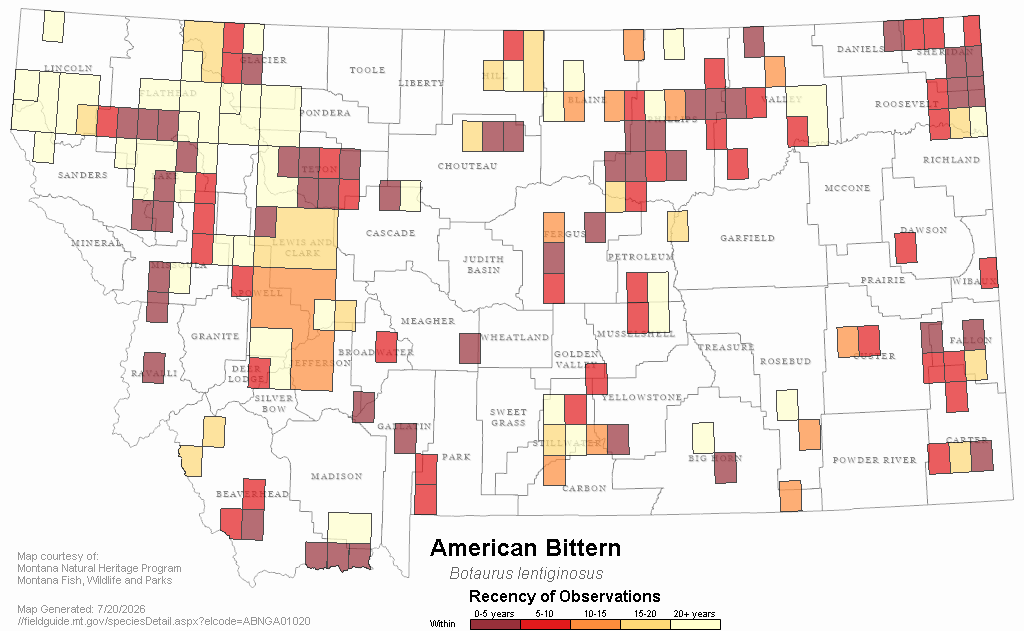
Have you ever been out recreating in Montana, maybe near a wetland, and a strange sound stopped you in your tracks? Perhaps a repetitive, guttural “oonk-ga-loonk”? You might have heard one of Montana’s most unique bird songs – the musings of the elusive American bittern.
To make these unique sounds, the birds use a body movement that brings air into their esophagus, causing it to inflate. When they release the air, it makes a low-frequency sound. These songs and calls are used to defend territory and possibly attract a mate. Low-frequency sounds are necessary because they are more effective at traveling through the dense vegetation where bitterns live. Females make a similar sound, but they are quieter than the males.
Potentially Montana’s hide-and-seek state champions, American bitterns are a 28-inch-long ground-nesting migratory bird species with a 42-inch wingspan. The danger of predation from being on the ground frequently requires bitterns to be experts at blending in with their surroundings. When threatened, they mimic the tall plants around them by staying motionless and pointing their head straight up, causing their eyes to comically rotate cross-eyed to the front. Their pointy bill with a distinctive streaky brown and buff coloring, and their statue-like stillness in tall cattails or bulrush, make them almost impossible to spot.
American bitterns are a species of concern in Montana. Habitat loss, fluctuating water-management practices, nest disturbance by humans, improperly discarded fishing tackle and avian influenza are current threats to bitterns. More research is needed to understand the impacts these unique birds face in the state.
This content is sourced from
Montana Fish Wildlife parks
. It reflects the author's views and has not been edited by our newsroom. It may have been generated using AI assistance.