


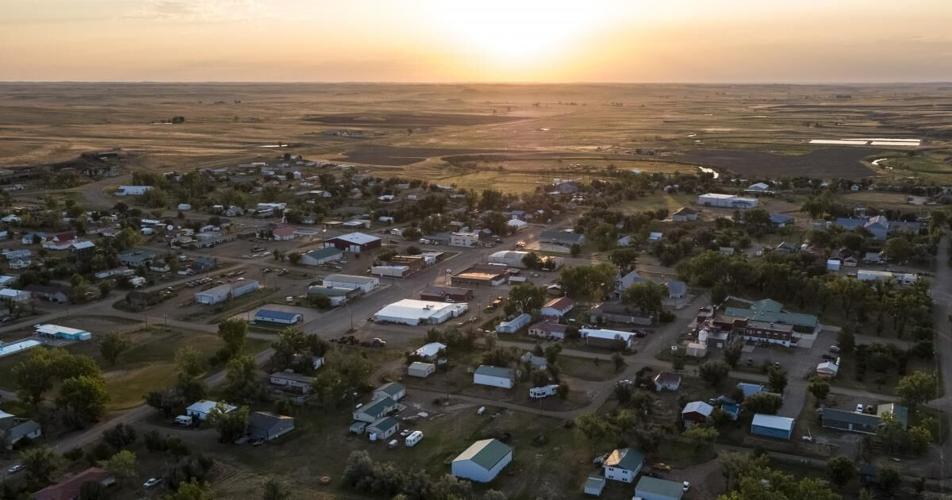
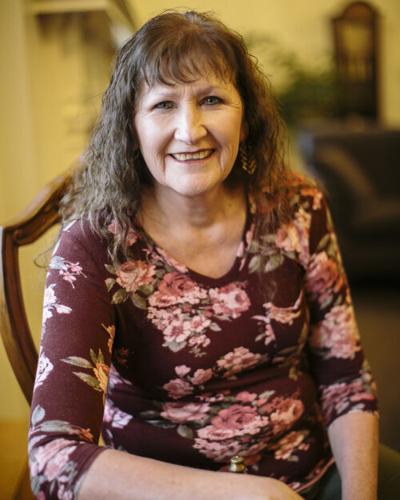
As a community health worker and dental assistant with Smiles Across Montana, Melanie Gopher works on the Blackfeet Indian Reservation at the nonprofit’s mobile clinic. She visits rural schools and facilitates dental care for children who would otherwise struggle to access it, but she has also found other ways to help kids and families.
Gopher, whose family has lived in Heart Butte on the reservation for generations, said community connections have helped her do more, like supporting a child who was being bullied, meeting with families who are new to the area and connecting parents to resources such as public assistance and food banks.
“I know a lot of the people we serve are low income and just kind of in survival mode,” she said. “But they see our faces in the community and know we want to help and they can trust us.”
Montana State University has for years led efforts to train community health workers like Gopher and equip them with the skills they need through the Montana Office of Rural Health and Area Health Education Center, which is housed in the Mark and Robyn Jones College of Nursing.
People are also reading…
Now the MSU-based center is managing a $50,000 grant from the Montana Healthcare Foundation to support the growth of a Montana Community Health Worker Association in collaboration with partners across the state.
The goal is to provide networking opportunities for community health workers and to nurture the profession by developing training, staffing and organizational support outside of MSU, said Kailyn Mock, director of MORH/AHEC.
Currently, community health workers receive financial support to complete an eight-week training through MORH/AHEC. Since it started in 2017, the training program has taught more than 500 community health workers across the state. MSU also spearheaded another training series, Caring for Indigenous Montanans, that many community health workers have used to strengthen cultural awareness when working on reservations or with Indigenous patients.
Community health workers often go by different titles, such as patient advocate or case manager, and are employed by hospitals, schools, local governments and nonprofits. But they are driven by an overarching goal of helping patients address the social challenges that can impact their physical health and access to care, said Kayla Thomas, president of the Montana Community Health Worker Association.
Thomas, a community health worker for Providence St. Joseph Medical Center in Polson on the Flathead Indian Reservation, said community health workers “fill in the gaps” to aid people seeking healthcare and other resources.
Thomas most often helps patients with transportation and housing needs. She has forged partnerships with CSKT Transit, Western Montana Transit and taxi services to get people rides to medical appointments, which she said has had immediate, positive impacts. Walking people through applications for housing support and getting their name on waitlists for subsidized housing has helped people finding affordable housing, she said.
Forming the association and having a space to share insights and hear from others in the field is “really satisfying,” said Thomas.
“People really love the opportunity to come together in person and lean on each other and really get that validation of what’s working and, honestly, what’s not working in their different areas,” Thomas said. “I think we are setting up future community health workers for success and to continue advocacy for the field within the state.”
Alma Knows His Gun McCormick, an enrolled member of the Crow tribe in Montana, is the director of the nonprofit Messengers for Health, which has operated across the Crow reservation for 25 years. The group connects people with Indigenous advocates to increase access to preventive cancer screenings, chronic health condition management and support systems for people experiencing grief, among other interventions.
The nonprofit’s community health work began in 2001 as part of research collaboration with MSU focused on improving cervical cancer screening rates for Crow women. McCormick said building trust within a community is something community health workers are uniquely positioned to do.
“We had to overcome some of our Crow cultural taboos because, in the Crow language, there really wasn't a word for cancer. To say the word ‘cancer,’ that was something negative,” she said. “Once the women were made aware that Crow women do not have to die from cervical cancer, they were willing to apply what was shared with them. They know that someone they trust is encouraging them to go in and have this exam and that it’s OK.”
The work led to higher screening numbers and reduced rates of cervical cancer on the reservation. Today, McCormick and many Messengers for Health volunteers have completed MSU-facilitated community health worker trainings and continue providing resources for community members. The nonprofit also hosts two AmeriCorps service members funded through MORH/AHEC.
Mock said supporting Montana’s community health workers aligns with MSU’s land-grant mission.
“Community health workers truly touch the lives of the people who need it most – far beyond Bozeman, in every corner of the state,” she said. “We may never know the breadth of impacts they’ve already had, and will continue to have, as MSU helps the profession gain momentum in Montana.”


