


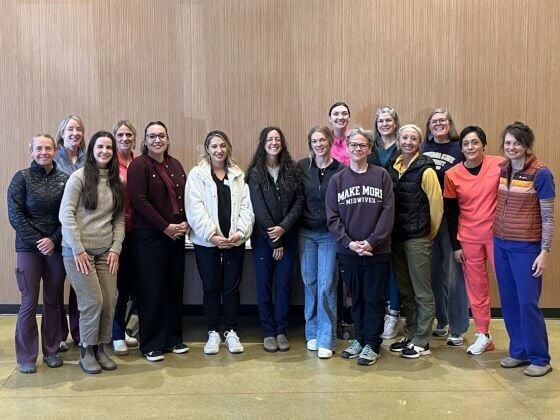
BOZEMAN — Montana State University hosted nine nurse-midwifery students and their faculty in Bozeman the final week of October to practice labor, birth and other midwifery-related skills.
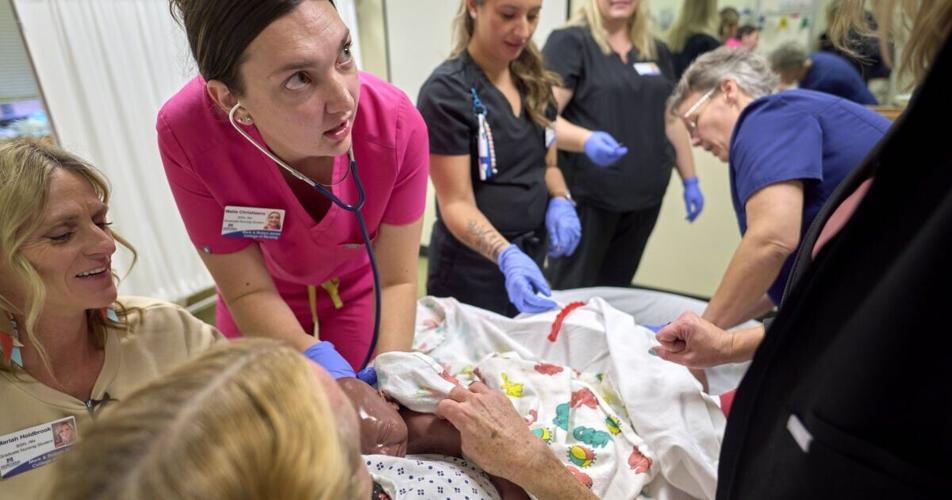
Over three days, students practiced in person the skills they had learned in coursework, connected with peers face to face and engaged in simulations with high-fidelity manikins and live actors to mirror routine and emergency scenarios in pregnancy, postpartum and birth in the Mark and Robyn Jones College of Nursing’s brand-new Jones Hall.
The group included six students who are set to graduate from the three-year Doctor of Nursing Practice nurse-midwifery program in May and three second-year students. Most coursework is distance-delivered because the students live in every corner of the state, including Valier, Browning, Billings, Roberts, Polson and Kalispell. Five midwifery faculty also traveled from across Montana to engage with the students, including program lead Mariah Hill, who is based at MSU’s nursing campus in Missoula.
People are also reading…
“We are lucky to have our amazing faculty and preceptors here who have incredible stories to share,” Hill said. “They’re very passionate, resilient, wise and courageous midwives who are deeply committed to mentoring and nurturing this next generation of midwives, the very first to be educated by a Montana-based program.”
In Bozeman, simulation director Joe Poole led students in maternal and neonatal health simulations, including complications involving unexpected breech births, postpartum hemorrhage, shoulder dystocia and a retained placenta, as well as simulating healthy, normal vaginal births. In one simulation, instructor Honey Newton played the role of a laboring mother, engaging students in discussion as they monitored the vitals and respiratory status of the newborn immediately after birth.
Third-year students also rotated through stations for hands-on practice of advanced skills. Those included practice with shoulder dystocia maneuvers (where an infant’s shoulder becomes stuck behind the mother’s pelvic bone in childbirth), pelvic exams, perineal suturing, breastfeeding support and safety planning with a patient with postpartum psychosis.
Students recalled their experience in the foundational midwifery skills clinic held in Bozeman last year and said they were proud of their growth and how much more comfortable they felt practicing the skills after three semesters in clinical placements. The group graduating in May will be the inaugural class in Montana’s first-ever nurse-midwifery program, which started in 2024 thanks to Dean Sarah Shannon’s vision, donor support and a major gift from Mark and Robyn Jones.
"I feel so much more comfortable doing these skills this year and it’s pretty incredible thinking about where I was at with these last year and how much I have grown as a nurse-midwife,” said Malia Christiaens, who is from Valier in north-central Montana and earned a bachelor’s degree in nursing from MSU, too.
Students and faculty also had the opportunity to engage in a cultural safety training led by Dr. Amy Stiffarm, the founding executive director of Berry Medicine Native Birthwork Initiatives. Stiffarm travels around Montana educating healthcare providers on how to care for Native American mothers and families without stigma, and some of the unique cultural considerations that can arise. For example, accommodating large families in the birthing room or honoring the difficulties of traveling from a rural area to access care are considerations that Stiffarm discussed with the students. Overall, the presentation focused on how to integrate traditional Indigenous knowledge and practices as key resources alongside Western healthcare models.


