

Steve Sullivan, Air Force veteran
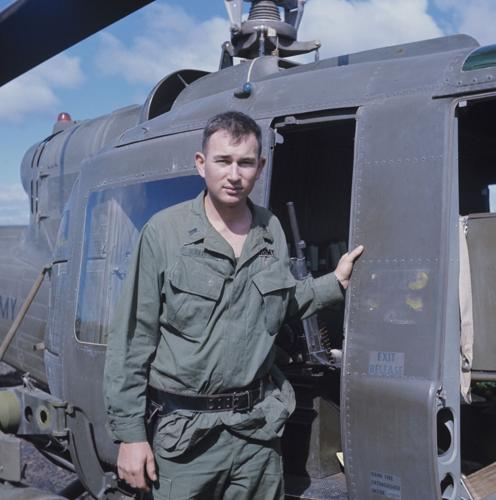
A pilot and second lieutenant in the 57th Assault Helicopter Company in Vietnam in 1967, Steve Sullivan found himself in one of the unit’s eight armed helicopters. While 20 of the 28 aircraft in the unit were unarmed and carried troops and cargo, and occasionally filled in for medical evacuations, Sullivan’s gunships, as they were called, were part of eight remaining helicopters that carried rockets and 40 mm guns that provided aerial fire support.
Two weeks before the Tet Offensive in January 1968, Sullivan’s unit, also referred to as the Gladiators, which was stationed inland in the Central Highlands in Kon Tum, was attacked and sustained its first casualties of the war. Six people were killed and 30 wounded. They had been stationed there without infantry support.
“As strange and awful as that sounds though, it was a blessing in disguise,” Sullivan said. “When the Tet Offensive started later that month, we were more prepared and more alert. We were part of a huge fight but didn’t lose anyone during that attack, fortunately.”
The offensive, named after the Vietnamese New Year, was a coordinated series of surprise attacks launched by the North Vietnamese and Viet Cong intended to weaken U.S. and South Vietnam’s morale and push for a negotiated end to the war. Following the battle, Sullivan took over as commander of the platoon, a position he remained in until his return stateside in October 1968. A graduate of Montana State College (now Montana State University) in Bozeman, he was 23 years old.
“While I have been grateful for the time I was in the military, I’m certainly not thrilled about us getting into wars,” Sullivan said. “Shortly after we arrived in Vietnam, we figured out it was a stupid war and made no sense whatsoever. Because a lot of the troops were young kids, some of them 17 and 18 years old, while they may not have had the chance or the experience to really think through why we were over there, the college grads and officers did. And we knew the best job we could possibly do while we were over there was to get everyone home alive.”

Steve Sullivan in Vietnam, circa 1967
Sullivan said while he doesn’t mind talking about this time flying helicopters over the jungle, it’s difficult to describe what he experienced and what he saw to people who have never been part of the war.
“Oh, it was scary over there. You’re in your 20s and you’re young and you think you’re going to be OK, but on the other hand you knew you could get it anytime,” he said. “We were scared a lot of the time. Even though we lived in tents, most of the guys chose to sleep in the bunkers, which were heavily sandbagged and partially underground. We slept there because we got rocketed and mortared all the time.”
Sullivan said everybody pretty much just counted down the days before they could leave.
“My trip home was a pretty abrupt transition,” he said. “I was flying my helicopter over the jungle that morning in Kom Tum, came back, walked across the runway to a plane, and it took off. After refueling in Japan for a quick stop, we flew directly into McChord Air Force Base in Washington. To come directly out of combat and be home in less than 24 hours was strange.”
So strange that, with the three months left on his service, he asked the assignment commissioner if he could stay in another year. Because he had trained as part of the U.S. Army Corps of Engineers during his initial training, he was immediately reassigned to the Panama Canal Zone, providing aviation support for the peacekeeping operations of the Organization of American States. For the next four years, Sullivan’s aviation team — by now he was a captain — did terrain mapping between Central and South America.
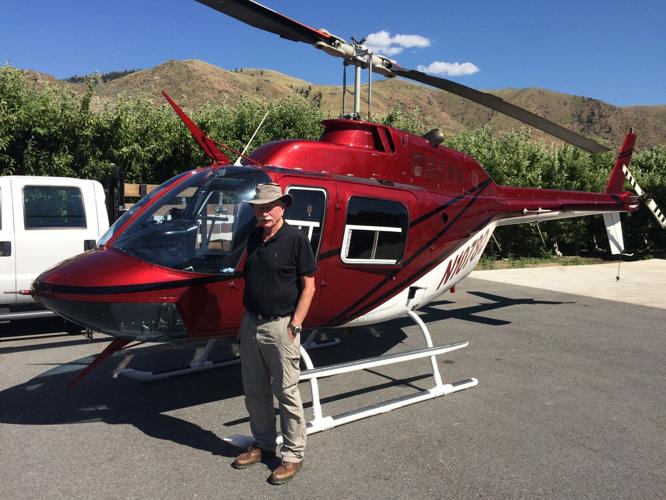
Once his tour was up, Sullivan moved to California, joined the U.S. Army Reserve and started a helicopter business that he ran until his retirement in 2008. Today, he still flies — both a helicopter he leases from his former company and a Cessna plane.
“I’m a lucky guy,” Sullivan said. “I fly for fun now.”
To learn more about the "Stories of Honor" series, please visit states.aarp.org/montana/storiesofhonor. AARP is the sponsor of the Stories of Honor series, which features profiles of veterans across Montana.